Wednesday, July 31, 2013

美媒:传统新兴市场弊端渐显 缅甸有望绘制新蓝图

【环球网综合报道】美国《商业周刊》7月30日文章称,国际资本大量流入缅甸,其有望成为开启全球经济新模式的一把钥匙。由于传统新兴市场经济发展模式弊端颇显,缅甸若想大力发展经济,就需摒弃传统模式,进行新路探索、改革转型。
  文章表示,阔别缅甸约60年后,美国可口可乐公司在缅甸设立一座装瓶工厂,生产可口可乐,并将在未来五年内斥资2亿美元在缅甸增加生产和销售。在上月举行的世界经济论坛上,可口可乐公司首席执行官穆泰康将此次装瓶厂投资喻为“柏林墙倒塌”。
  文章称,从发展角度看,缅甸的确是一张白纸,但长远来看,其具备潜力超越传统新兴国家,并将开创一个新的全球经济发展模式。缅甸及其它新兴国家注重“跳跃式发展”,但是“跳跃式发展”只是另一个通过重复运动来达到经济创收的游戏而已,缅甸若想成为跨国公司发展中心,就需进行转型改革。

缅甸金融领域改革由去年4月实施有管理的浮动汇率制度拉开序幕。可口可乐进入缅甸之前,该国内私人银行开始推广自动柜员机(ATM)服务。据悉,该国一个名为缅甸支付联盟的新部门将在两个月内推出一种新的借记卡网络,该网络允许银行共享ATM机并提供更广泛的服务。
  文章称,除金融改革外,移动网络、电气化建设也已逐步在缅甸展开。缅甸现有人口6000万,大部分生活在农村,76%的人口没有电且90%的人口没有手机。开发缅甸农村离网电气化既有挑战,也蕴含着巨大商机——其将为缅甸带来如小额信贷、农作物保险及天气信息之类的移动信息服务,进而转变缅甸传统农业模式。除此之外,电气化和移动连接可大大改善下一代缅甸人医保系统。
  文章指出,缅甸发展需要从国内经济转型开始,需从“服务投递者”转变为 “服务制造者”。政府除了放宽投资限制以外,更需建立让人信赖的法律和金融体制,让更多的外国资本有信心进入这个市场。(实习编译:明思吉, 审稿:李娜)

緬甸仰光僅3棟辦公樓 外企涌入使租金超紐約

自歐美去年解除對緬甸的制裁後,各大跨國企業大舉入駐仰光,辦公大廈供不應求。據台灣“聯合新聞網”7月31日報道,這個緬甸商業重鎮只有三棟辦公大廈,租金卻漲到比美國紐約曼哈頓下城區還高。
  報道稱,這三棟辦公大廈其實都不到27層,租金一年半漲近四倍,如今每平方英尺叫價100美元(約613元人民幣),美國房地產公司世邦魏理仕(CBRE)所公佈紐約曼哈頓下城區不到75美元。
  投入緬甸房地產的新加坡上市公司祐瑪戰略控股(Yoma Strategic Holdings)估計,仰光需要至少870萬平方英尺(約81萬平方)的辦公室空間才能滿足跨國企業入駐的需求。而房地產服務公司高力國際(Colliers International)估計,仰光目前可供辦公室空間只有60萬平方英尺,2015年以前也只能提供195萬平方英尺。
  祐瑪控股主席潘繼澤說:“因租金上漲,且至少未來七年短缺還會更緊,這對外國開發商是極富吸引力的市場。”緬甸去年4月大選後,國際紛紛放鬆制裁,祐瑪控股在新加坡上市股票大漲逾一倍。這一商機吸引了來自東南亞的眾多地產開發商,新加坡上市的速美建築集團(Soilbuild Construction Group)、越南的皇英嘉萊(HAGL)以及香港的香格里拉(亞洲),均已宣佈在仰光的投資。

  世邦魏理仕泰國負責人席密斯特說:“這裡瀰漫著一股氣氛,似乎就市場開放而言,這是東南亞不會再有的機會。”不過,正如潘繼澤所說,“現在不論蓋什麼,都滿足不了即時需求。”
  由於沒有辦公樓,很多跨國企業退而求其次,進駐飯店來應急。
  緬甸于1997年5月遭美國經濟制裁,歐盟也在1996年10月開始制裁緬甸,直到去年才均已解禁。緬甸至今經濟仍然封閉,電信系統常斷線,當地連信用卡都沒聽過,一切現金支付。當地商家接受美元,但一般不收舊美鈔。

More Japanese investments expected in manufacturing, transport and IT

Japanese investments are expected  increase significantly in Myanmar’s manufacturing, transport and information technology sectors, according to the Directorate of Investment and Company Administration (DICA).
An official from DICA said there is an influx of Japanese businessmen visiting their office for information to open branch offices and to make investments in Myanmar.
Among them include machinery-manufacturer Kubota Corp, industrial and engineering corporation Hitachi Zozen, transport companies Nippon Express and Toyo Logistics.
Meanwhile, Japanese automakers Toyota, Nissan, Honda, Suzuki and Mitsubishi have opened service centres in Myanmar.
Among them, Nissan is soon to open its first car showroom in the country’s commercial city Yangon.
Japanese IT firms NTT Group, KDDI Corp and NEC Corp are also planning to invest in Myanmar, market observers said.
On the other hand, Myanmar needs to ensure steady and affordable electricity supply and improve transportation and information infrastructures to boost the investments and the economy, Japanese businessmen said.
Japan has invested over US$65 million in Myanmar within the last two years. Its total investments reached $270.28 million at the end of June.

Last February, an executive from Japanese largest economic organization Keidanren said at the bilateral business conference in Yangon that Japanese investments in Myanmar’s garment and consumer goods industries amount $43.6 million.
Japan is also developing the Thilawa Special Economic Zone in Thanhlyn-Kyauktan area of suburban Yangon. The multi-million project includes building a seaport, roads and other infrastructural development programs.
Japanese government has earlier pledged to offer Myanmar 0.01 percent interest loans on 40-year term for the Thilawa project.

PT Telkom wins permit to construct mobile network in Myanmar

Indonesia based PT Telkom (Telco) has been selected to construct telecommunication mobile network in Myanmar, according to the Telco reports.
Telco is the largest telecommunications services company in Indonesia. Founded in 1856 it is a majority state-owned company.
Myanmar awarded Norway-based Telenor and Qatar-based Ooredoo communication licences at the end of June. Among two operators, Ooredoo has likely chosen PT Telkom to carry out construction works of mobile network, according to reports.
“Telkom had shown cooperation that could be carried out with international mobile enterprises according to our agreement,” said Arief Yahya, Telco CEO.

Although Telco was not involved in the competitive mobile tender for the two operating licenses, they were granted permission for opening a branch office in Myanmar.
Telekom mainly operates in fixed Line telephony, mobile and internet services, digital television, property and construction and IT Services, while other businesses are run by subsidiaries.
Moreover, the communication firm is now operating in Indonesia, Hong Kong, Austria, Malaysia and Singapore and planning to extend its market in Asia and the Middle-East.

Tuesday, July 30, 2013

缅甸客户追加订单 再购中国重汽40辆豪沃客车

7月下旬,中国重汽再接缅甸老客户40辆JK6119GD豪沃客车订单,这是在原出口缅甸100部客车的基础上的追加订单。
今年初,中国重汽与缅甸客户签订出口100部JK6119GD豪沃客车订单,并在缅甸运行6个月。试运行后,中国重汽豪沃客车的整车质量得到缅甸销售商的好评,为此缅甸客户再次追加了40部车的订单。
对此批订单,中国重汽根据当地气候条件及道路情况,优化设计方案,完善技术工艺,并在产品防腐、包装与运输方面做了详尽、周密的安排。(记者 王倩)
实习编辑 黄金铮
来源:中国日报山东记者站

緬甸投資熱 仰光租金勝曼哈頓

  • 2013-07-30 09:03
  •  
  • 中央社
  •  
  • 中央社
 緬甸開放以來,引爆全球投資熱潮,也順勢炒高房價,如今仰光租金已超越紐約曼哈頓。
 據彭博報導,丹利(Sean Danley)銜命為美國總公司打造仰光分公司以來,他在過去6個月來不斷物色適合的辦公地點。
 據知名房地產仲介商世邦魏理仕(CBRE Group Inc.)表示,丹利看上了仰光市3棟1990年代完成的獨棟式大樓,但年租金每平方英呎超過100美元,相較曼哈頓市區年租金每平方英呎未達75美元。
 這3棟獨立別墅不僅沒有安全門、環境也不乾淨,還必須與其他公司分享辦公空間,再加上坐落的位置不盡理想,可說一無是處,實在與丹利所代表的這家營收高達290億美元的工程暨營建公司的形象不相稱。丹利以未獲授權為由謝絕透露他所代表的公司大名。

 在物色10處辦公地點,以及其中一處適合地點被別人捷足先登後,丹利目前依然在尋覓辦公大樓。
 丹利指出:「我們可不能進駐一處上班地點,但卻有人整晚都在走道上用大火炒nasi goreng。」nasi goreng是指印尼炒飯。
 許多地產開發商則亟欲為丹利排難解紛。隨著緬甸對外開放,跨國企業紛紛大舉進駐緬甸,導致辦公大樓需求量暴增,地產商紛紛大興土木,以滿足企業需求。
 據祐瑪戰略控股公司(Yoma Strategic Holdings Ltd.)估計,仰光作為緬甸最大商業都市,至少需要870萬平方英呎(相當80萬平方公尺)的辦公空間才能滿足需求。(譯者:中央社趙蔚蘭)1020730
來源;中時電子報

Myanmar needs national aviation policy: IATA

The International Air Transport Association (IATA) said Myanmar needs a national aviation policy. In a written reply to Channel NewsAsia's queries, IATA said the policy must take into account factors like expected traffic growth, government regulation and personnel training.


YANGON: The International Air Transport Association (IATA) said Myanmar needs a national aviation policy.
In a written reply to Channel NewsAsia's queries, IATA said the policy must take into account factors like expected traffic growth, government regulation and personnel training.
In response, Myanmar's Civil Aviation Department said such a policy is being drafted and should be ready by 2014.
Myanmar's aviation sector has never been considered a leader in the field given its decades of isolation from the international community.

But as the country transforms, its civil aviation department believes Myanmar can become a Southeast Asian aviation hub.

Win Swe Tun, deputy director general at the Department of Civil Aviation, said: "(For a) long time, we (have been) without the specific aviation policy. We just accept the foreign operators. We have no practice of the marketing or attraction to the foreign operator. But now, it's a good opportunity for more (international) relationships... But on the other side, it's a challenge for us. So we definitely need the policy also."


Currently, Myanmar's civil aviation authority is both the regulator and manager of the country's airports.

However, Mr Win Swe Tun noted that plans are underway to farm out the operations of a service provider to another agency.

Another challenge is the need to boost the less-than-desired reputation of Myanmar's local airlines.

Authorities are now giving this high-priority attention.

Mr Win Swe Tun said: "We had no restriction about the aircraft. But in 2011, we restricted the existing aircraft, not to use any more after 25 years. And for new batches or hire aircraft, it can be used up to 20 years and also for the operation, we have safety oversight system and also from the airlines, we have safety management system so we need to take more care of the safety issue."

Over the last two months, Myanma Airways encountered two incidences with one plane skidding off the runway, while another overshot the end of a runway, injuring two.

Last December, Air Bagan suffered a crash landing, killing two passengers and injuring about 10 others.

With increased air travel within Myanmar, safety takes centre stage.

Sao Thanda Noi, deputy managing director at Air Bagan, said: "I also agree and understand that people will be aware of the safety issues for the airlines in Myanmar. Also, we're adding more aircraft and newer aircraft to our fleet. So these are our preparations and process and also we're training more of our employees to get into the international standards."

Aung Gyi, managing director at Golden Myanmar Airlines, said: "If we talk about our Myanmar aviation industry, we're in the kindergarten stage. So far, there's a bad reputation, but not a big issue, we can recover and go to a certain level in very short period of time. The people who are operating, they have to absorb and they have to accept to the modern, latest technology to go on the safety side. What we're talking about all the time - safety management system."

Golden Myanmar has hired foreign industry experts to help train its local staff.
The airline is hoping the government will help provide training and introduce stricter requirements for employee training.
IATA said Myanmar's national aviation strategy must be tourism and business-friendly. This will enable Myanmar to enjoy the social and economic benefits such as job creation which the aviation sector will bring.
IATA recognizes Myanmar's efforts in developing its regulatory system, air traffic management as well as airport infrastructure and hopes to see a continued momentum in these efforts.  

MYANMAR PLANNING MARKETS ON INDIA BORDER

Myanmar ministry of commerce is preparing to open border markets on Myanmar-India border, the state media reported.
Markets will be opened in villages of Tiddim, Tunzan, Kyeekha, Leshi, Lahal and Tamu in Sagaing Region and Chin State.
“We are planning to open first border markets on Myanmar-India border. It would be made possible after consultations at region/state level and with locals. Khinman, Laylet, Dakhai, Tiao, Fatan, Kahibai, Baphai, Hanlan, Pankwa and Zotae border markets will be opened in Myanmar side,” director U Teza Aung Win of regional trade division is quoted as saying by the New Light of Myanmar.
Myanmar has set to expand more markets in Sunmara, Yankwin, Ponnyo and Khampet India as India has planned some in the India side.

Recently, India and local government of Sagaing Region launched a bus line plying between the India border town to the region’s capital Monywa and the Myanmar’s cultural city Mandalay.
There would be 10 markets in border towns and the first of it kind will be opened in Naga Self-Administered Zone north of Shan State.
The director also told Myanma Alinn that they would be upgraded to border trade camps, building on their success.
source: myanmar update

Hin Leong Group to invest up to US$ 200 million in Myanmar

According to a report from Reuters published in June, Singapore based Hin Leong Group is planning to expand its business and start the distribution and selling of fuel products in Myanmar.

The group will spend between US$100 million and 200 million to start the business in Myanmar. Although Myanmar has plenty of oil and natural gas, it cannot produce enough fuel to use locally. Myanmar is importing tons of fuel every month to meet domestic demand.

“China, Myanmar, East Timor and Indonesia have needed fuel to develop their economy. We are importing fuel for them before but we want to provide more services,” the chairman of Hin Leong Group, told Reuters.


The group that is one of the top fuel suppliers to Myanmar is now planning to store fuel and expand distribution around Yangon.

“We are planning to sell fuel to customers directly in Myanmar, the least developing country in Asia. We are seeing the big international corporations entering Myanmar. Myanmar will be needed fuel more than ever,” he added.

Hin Leong Group has businesses in oil trading, bunkering, lubricants blending, diesel retailing, logistics support and storage support. The group is planning to expand their business in South East Asia including Myanmar.

Myanmar Calling Out for Indonesia’s Telkom

Telekomunikasi Indonesia, the nation’s biggest telecommunication company, has won a tender to manage Myanmar’s international networks.

“The trust given by the Myanmar government is the result of our team’s hard work on the ground in Myanmar. This will be an opportunity to show Telkom can be aligned with other big international operators,” Arief Yahya, president director of state-controlled Telkom, said in a statement on Friday.

Telkom has been tasked with modernizing Myanmar’s information and communications technology facilities following years of neglect during a period of military government that attracted international sanctions.

Arief said Myanmar, which is in the process of economic liberalization, would provide business opportunities, which Telkom was seeking to tap into by opening a representative office in the country.

“This proves Telkom’s seriousness in getting a foothold in Myanmar’s emerging market,” Arief said.

In April, Telkom missed out on two telecom licenses after Myanmar’s Ministry of Communication and Information Technology shortlisted 12 bidders. Telkom was not on the list.


Telkom’s expansion into Myanmar follows a call by State Enterprises Minister Dahlan Iskan last year for companies under his watch to aggressively pursue opportunities in the fellow Association of Southeast Asian Nations member.

Cement-maker Semen Indonesia is another company that has heeded the call, setting aside $200 million to buy a plant.

Telkom, via Telekom Internasional, a subsidiary that handles the company’s business overseas, has expanded into Hong Kong, East Timor, Australia, Malaysia and Singapore.

It has also set its sights on markets elsewhere in Asia, and in the Middle East.

In Hong Kong, Telkom offers “Kartu As 2 in 1,” a customized SIM product launched via Telkom Internasional Hong Kong last October. The SIM card contains both Indonesian and Hong Kong numbers.

According to Hong Kong’s 2011 census, there were 137,403 Indonesians, 1.9 percent of the population, living in the territory.

In East Timor, Telkom is investing $50 million to establish GSM and 3G telecommunications operations.

Last year the company secured a license to run telephony services for three years in the country.

Telkom is seeking a 60 percent market share in East Timor.

In Australia, Telkom is looking to enter the call center outsourcing business, while in Malaysia, it has established subsidiary Telekomunikasi Indonesia International.

The company was officially incorporated on July 2, according to Telkom’s recent unaudited financial statement.

Telkom has long had a working relationship with Singapore’s SingTel. The cooperation is an extension of the joint venture in Indonesia via Telkomsel, Indonesia’s biggest mobile phone operator, which is 65 percent owned by Telkom and 35 percent by SingTel.

Telkom reported a profit increase of 13 percent, to Rp 10.1 trillion ($9.86 billion), in the first half as its business expanded and revenue climbed.

The Bandung-based company posted a 9.4 percent increase in revenue to Rp 40.2 trillion in the first semester.

Shares in Telkom fell 2.2 percent to Rp 11,400 in Monday trading in Jakarta.

Source: Jakarta Globe

緬甸加速金改 強化央行權限


緬甸正加速金融改革,本月已通過「中央銀行法」,使央行邁向獨立並強化權限,還將建立連接央行與民間銀行的基礎結算系統,同時為開設證券交易所鋪路。
日經新聞報導,緬甸國會已通過中央銀行法,總統登盛簽署後在11日正式生效,使原本隸屬於財政部的央行獲得獨立地位。
外資人士透露,緬甸央行先前的主要職責是為填補財政赤字浮濫印鈔,如今把央行負責的金融政策從財政政策中切割出去,可望抑制鬆散的財政紀律與通膨高漲。
另外,緬甸央行要推動金融政策,先得建立可高效率處理央行與23個國內銀行間資金結算的系統。緬甸已計劃與日本大和總研、東芝及電信商KDDI等企業合作,明年1月啟用銀行基礎結算系統。緬甸政府還準備制定證券交易法,為開設證交所鋪路以扶植資本市場。

登盛2011年3月上任以來,不斷推動民主化與經濟改革,解除民營銀行外幣兌換與外匯業務禁令,實施管理浮動匯率制度,去年7月再開放民間銀行設外匯戶頭,為外資進駐緬甸創造環境。
但緬甸曾三度廢除貨幣,導致民眾手上的紙幣突然一文不值,民間銀行相繼破產,再加上結算系統不完善,民眾不願赴銀行存錢。因此如何恢復民眾對金融制度與銀行的信賴,成為緬甸政府的重要課題。
【2013/07/31 經濟日報】http://udn.com/


全文網址: 緬甸加速金改 強化央行權限 | 國際財經 | 全球觀察 | 聯合新聞網 http://udn.com/NEWS/WORLD/WOR2/8063955.shtml#ixzz2aZox7Hud
Power By udn.com 

Monday, July 29, 2013

Myanmar to develop upcoming Hanthawaddy airport as aviation hub

Myanmar wants to build a fourth airport and develop it as an aviation hub for international travel -- the upcoming Hanthawaddy International Airport will be located in the Bago Region, north of Yangon.

YANGON: Myanmar wants to build a fourth airport and develop it as an aviation hub for international travel -- the upcoming Hanthawaddy International Airport will be located in the Bago Region, north of Yangon.
Town planners also want to build a vibrant city around this new airport to turn it into a commercial hub.
Four players, including Singapore's Yongnam Holdings consortium and Korea's Incheon Airport group, have submitted their bids for the project. The other two are France's Vinci Airport and Japan's Taisei Corporation. The winning bidder will be announced before the end of July.

Currently, the Yangon International Airport can handle 2.7 million visitors annually, and its planned expansion will accommodate up to 6 million people. However, the new US$2 billion dollar Hanthawaddy airport, scheduled to be operational by 2018, will be capable of handling at least 12 million visitors every year.
Win Swe Tun, deputy director general of the Department of Civil Aviation, said: "With the land use area, it's about 9600 acres. It means it's nine times bigger than Yangon and also it's close with Bago city. It can have more freely operation of the aircrafts and it is a good location to connect with the ASEAN roadway and also the other industrial zones such as Thilawa.
"For Hanthawaddy project, it's not just to build as an international airport. They have big plans, just like aero-city inside the airport, the airport operations, and to (be involved in) other facilities and to do other business inside -- maybe like the maintenance organisation for aircraft, training centres and also some entertainment, golf courses, (and other businesses), including hotel accommodation."
Yangon is now Myanmar's financial hub. however, the country hopes to create a second commercial hub around Hanthawaddy airport, and possibly build a train network connecting the two cities.
Yangon International Airport only has four aerobridges and has issues handling bigger carriers such as the A380. That is why it aims is to move the bulk of its international operations to a new airport in Hanthawaddy, about two hours' drive from Yangon city centre.
The new airport will be able to handle up to over 30 aerobridges and can easily take on a number of A380 carriers. However, industry players have reservations.
Aung Gyi, managing director of Golden Myanmar Airlines, said: "Yangon international is already here, they should have an upgrade over here. My view is (it can last another) 10 years. Only after that, they should have to move.
"In Yangon, if you look at the international area, the northern end, they can extend it. If this transformation is not done in a proper way, it will affect your growth -- traffic growth and also expenditures.
"Definitely in Myanmar, Yangon is still the gateway -- the major city, the commercial city. So during this period when there's a pick up in traffic, then you're going to change to another one, there'll be many barriers."
Authorities will soon select a company to upgrade and expand Yangon International Airport. They have shortlisted four applicants, including Singapore's Yongnam consortium and Myanmar's Pioneer Aerodrome Services for the US$200 million project.

陈唱摩多 获日產缅甸经销权

(吉隆坡29日讯)陈唱摩多(TCHONG,4405,主板消费股)获独家经销权,在缅甸经销多款日產(Nissan)汽车。

陈唱摩多在缅甸成立两家子公司,即TCExpress Auto Services & SpareParts(缅甸)有限公司,以及ETCM(缅甸)有限公司。

同时,陈唱摩多也宣佈,其独资子公司——ETCM(MM)私人有限公司获日產汽车有限公司(Nissan Motor Co.,Ltd.)颁发独家经销权,以便在缅甸经销日產汽车。

Sunday, July 28, 2013

能源戰略 中緬天然氣管道啟用

〔中央社〕由中國大陸、緬甸、韓國和印度六方投資興建的中緬天然氣管道緬甸段,今天開始向大陸輸送天然氣,這也是北京在海外部署保護能源供應戰略的其中一環。

新華社報導,緬甸當地時間28日下午4時12分,由緬甸副總統吳年吞、大陸駐緬甸大使楊厚蘭等人,在緬甸中部大城曼德勒通氣儀式現場共同啟動投產按鈕,位於中緬邊境的中緬天然氣管道緬甸南坎計量站火炬熊熊燃起,現場響起掌聲和歡呼聲。

報導說,這標誌著經過3年的興建,中緬油氣管道跨國工程取得重要成果。

中緬油氣管道項目負責人姜昌亮在儀式上說,管道工程所經區域地質條件和自然條件都異常複雜,給施工帶來嚴峻考驗。中緬油氣管道2010年6月在緬甸正式開工以來,中、緬、印等地上萬名參建者克服重重困難,確保實現5月30日達投產條件的既定目標,並於本月15日進氣試運行。


中緬油氣管道項目是原油、天然氣雙管並行的管道工程。其中,原油管道起點是馬德島,天然氣管道起於皎漂,途徑緬甸若開邦、馬圭省、曼德勒省、撣邦,經南坎進入雲南瑞麗。原油管道長771公里,天然氣管道長793公里。

相關人員透露,中緬原油管道(緬甸段)也竣工在即。

中緬原油管道緬甸境內設計輸油量為每年2200萬噸,還建設一座規模為30萬噸級的原油碼頭,年接卸能力為2200萬噸;中緬天然氣管道設計輸氣量為每年120億立方公尺。

報導稱,中緬油氣管道工程全部建成投產後,每年將在緬甸境內下載200萬噸原油和20%輸量的天然氣,用於推動緬甸經濟發展和改善人民生活水準。

大陸近年來為確保能源無虞,除了在東南亞和印度洋取得多處戰略港口據點,也積極透過外交與談判,在陸地興建輸油輸氣管道,或是透過國營企業併購外國企業所擁有油氣設施。

Myanmar signs MoU with foreign company on building cycle power plant

The Myanmar electric power authorities have signed a memorandum of understanding (MoU) with two foreign companies, GMS Power Publish Co.,Ltd and Global Power Synergy Co.,Ltd of Thailand.

The MoU aims at conducting feasibility study for establishment of combined cycle power plant project in Ayeyawady and Yangon Regions,official media reported Saturday.

The cycle power plant project will be able to generate 500 megawatts, said the New Light of Myanmar.

Minister for Electric Power U Khin Maung Soe said that the ministry was carrying out power generation and distribution by applying energy resources in the country, adding that the construction of natural gas-fired power plants have potentials such as short construction period, full power generation and less environmental impact, he said.

The project will be 50 percent share each by the State and the companies and Asian Development Bank offered to disburse long-term loans 50 percent share for the project.

Feasibility study will undertake in Bogale and Kyaiklat Townships of Ayeyawady Region and Kawhmu Township of Yangon Region.

Due to the high demand in electricity, the government is striving to produce electricity from natural gas, diesel, coal fire, solar power, wind power, biogas and waste fuel in addition to hydropower.

Source: Xinhua  

Myanmar-China gas pipeline starts to deliver gas to China

A Myanmar-China natural gas pipeline (Myanmar section), co-invested by six parties from four countries including China, Myanmar, South Korea and India, was inaugurated in northern Myanmar's Mandalay on Sunday and started to deliver gas to China.

At about 4:12 pm (local time), Myanmar Vice President U Nyan Tun, Energy Ministers U Than Htay and U Zeya Aung, Chinese Ambassador to Myanmar Yang Houlan and a South Korean representative jointly started up the commissioning button.

When torches flamed in the sky of Namkham Measuring Station of Myanmar-China Gas Pipeline, a storm of applause and cheers broke out on the ceremony site and Namkham Metering Station.

The pipeline is part of a so-called Myanmar-China Oil and Gas Pipeline project, which also includes building a crude oil pipeline. Starting from Kuaykphyu, it passes through Rakhine state, Magway and Mandalay regions and Shan state and enters Chinese territory at Ruili, Yunnan province through Namhkan.

The gas pipeline stretches for 793 km onshore within Myanmar's territory with six processing stations, while the crude oil pipeline, which is nearing completion, starts from Made Island and extends onshore for 771 km.

The gas pipeline has a designed annual throughput of 12 billion cubic meters before off-loading in Myanmar. The transmission capacity of the crude oil pipeline on the Myanmar side is designed at 22 million tons per year with a 300,000-ton crude oil wharf being added.

After the completion and commissioning of the whole project, 2 million tons of crude oil and 20 percent of the designed throughput of gas will be off-loaded in Myanmar, which will be helpful to promote Myanmar's economic development and people's living standards.

Two joint ventures -- South-East Asia Crude Oil Pipeline Co., Ltd. (SEAOP) and South-East Asia Gas Pipeline Co., Ltd. (SEAGP) -- were registered and established with investment from all parties to respectively take charge of operation of the two pipelines.

The SEAOP involves China National Petroleum Corporation (CNPC), Myanmar Oil and Gas Enterprise (MOGE), while the SEAOP involves CNPC of China, DAEWOO of South Korea, OCEBV of India, MOGE of Myanmar, KOGAS of S. Korea and GAIL of India.

The two joint ventures have conducted operations in strict accordance with specifications and patterns of international pipeline projects since the beginning of pre-feasibility study stage, according to sources with the investors.

Responsible official of the SEAOP Jiang Changliang said at the commissioning ceremony that the areas where the pipeline passes through are featured with complicated terrain and environment, which posed serious challenges to the construction.

After three years of construction, the gas pipeline (Myanmar section) was completed and underwent test run on May 30.

The Myanmar-China Oil and Gas Pipeline project is said to have created a huge amount of job opportunities for local people, hiring as many as over 6,000 for the construction work.

Meanwhile, a total of more than 220 Myanmar enterprises were involved in the project with their employees being technically trained.

There has also been socio-economic development aid projects undertaken along the Myanmar-China gas pipeline project areas. So far, $20 million have been donated for use in education, medical treatment, health and disaster relief.

Besides, 45 schools and 24 clinics have been built to improve the teaching facilities for 19,000 students and medical facilities for 800,000 local people.

The joint ventures also offered 10 million dollars for repairing high voltage power grid line in Kyaukphyu, in which CNPC donation accounted for 3 million dollars.

In the second half of 2012, when Rakhine state experienced communal riot, the joint ventures extended 50,000 US dollars of aid in cash and 10 tons of rice. Moreover, they also donated 50, 000 dollars to quake-hit victims in central Myanmar.

Observers here said the China-Myanmar Oil and Gas Pipeline project is a multi-national and mutually beneficial energy project and also carries the goodwill of the peoples of China and Myanmar, adding it is bound to promote the regional economic development while deepening the China-Myanmar "Paukphaw" (fraternal) friendship.
 
Source: Xinhua 

INDONESIAN MINING FIRM LOOKS TO MYANMAR

Indonesia’s state-owned mining firm PT Bukit Asam is preparing to throw cash into power plant projects in Myanmar, the Jakarta Post reported.
The firm will invest USD 320 million as starting capital in the country.
Milawarama, president of PT Bukit Asam, said the firm had established a partnership with a local firm which he decline to name.
“We have reached discussions at the level of board of directors, including about how to enter the market and the sharing in the partnership,” Milawarma is quoted by the Jakarta Post.
He also said the company would hold the outstanding stake in the new firm.

The company will develop a coal-fired power plant that would produce 200 megawatts with USD 320 million investment.
The firm also expected that the second project would double the first one in scale.
The president of the company also said it is seeking funding from international and local banks for the expansion.

Gem Lab eyes ‘Ruby Land’

A foreign company is working to bring international testing standards to Myanmar’s gem industry – and provide recognised quality certificates to boost prices.
Gubelin Gem Lab, a Swiss company that has a regional office in Hong Kong, sent foreign gemologists to Mogok, known as “Ruby Land”, in early July to test gemstones in the area, which has previously been off-limits to foreigners.
“After the government allowed foreigners into Mogok in April we received permission for our technicians to go into the area,” said Ko Hpone-Phyo Kan-Nyunt, a Gubelin Gem Lab gemologist.
The company has already sent stones back to its main lab in Hong Kong and will announce their quality soon.
“There is no database of Myanmar gemstones at our lab, which is why we wanted to do our own sampling and testing,” Ko Hpone-Phyo Kan-Nyunt said.

The company also held seminars on gems and testing in Mandalay and Yangon on July 20 and 21 at which its experts made presentations about gems and gem labs, said seminar organiser Ko Ko Myo.
Lore Kiefert, a chief gemologist at Gubelin, said Myanmar’s rubies are rated the best in the world and its sapphires second best.
Ko Hpone-Phyo Kan-Nyunt said Myanmar needs better labs to certify the quality of stones mined here.
“Myanmar’s gemologists are good at testing but our testing facilities do not meet international standards,” he said.
“When traders sell stones, foreign buyers often ask for certificates, which cannot be provided. This leaves the quality of stones – and the industry – a little uncertain and lowers prices.”
Kyaw Thu, owner of a gem lab at FMI Centre, said Myanmar needs top-quality labs to certify its stones in an increasingly competitive market. “When we sell gems internationally we need quality certificates,” he said.
“Many gemstones are mined in parts of Africa and Vietnam that are quite similar to ours but not quite as good. If we don’t have certificates, then we won’t earn the same prices.”
Gubelin plans to open a mobile lab in Myanmar.
source: mmtimes

Volatility likely after govt loosens grip on kyat

Domestic banks say they are ready for the inter-bank foreign exchange trading market that will be launched in August as the government takes another step toward a freely traded kyat.
U Zaw Lin Htut, senior general manager of international banking at Kanbawza Bank, said lenders have already installed the necessary telecom infrastructure, including extra land lines, and have developed backup plans to deal with network failures.
Once the market opens, domestic banks will be able to negotiate
exchange rates with each other. Rates can change in an instant rather than once a day as they do now, U Zaw Lin Htut said, referring to the central bank’s daily auction that sets the exchange rate
between the kyat and the US dollar every weekday at 9am.

He predicted that the market will be “lively and dynamic”, but said that trading should be conducted within a narrow margin so that exchange rates remain stable.
The Yangon Foreign Exchange Market Committee – which comprises the 16 domestic banks given licences last November to conduct foreign-currency transactions – has been drafting regulations and a code of conduct in anticipation of the move to interbank trading. It will make these public in August.
U Win Myint, a spokesperson for the Ministry of Commerce, said the exchange rate between the kyat and the US dollar will be determined by supply and demand. He added, however, that the market could possibly be manipulated by those who hold large reserves of foreign currency, such as banks and exporters, and that this could cause the kyat to depreciate.
“Someone holding or selling a lot of money could have an impact on the currency trade, but the central bank can intervene in [the market] if manipulation is occurring,” U Win Myint said.
The central bank plans to complete the switch from the managed-float system it has used since April 2012 to a free-floating policy within a year, deputy finance minister U Maung Maung Thein said.
“When the market operates under a free-floating policy, we have to think about how far we should go,” said a spokesperson for the central bank’s foreign exchange management department. He said the new system will not be entirely free but it will be freer than the current one. Initial trades will be restricted to transactions between the kyat and the US dollar, he added.
The spokesperson said the transition is being made with help from the International Monetary Fund and the Japan International Cooperation Agency. The former is providing advice while the latter has provided technical training to central bank staff as well as advice.
Sean Turnell, an economics professor at Australia’s Macquarie University, described the move as “good policy”.
“There are risks of course,” he said. “The banks will have to develop hedging and other strategies against exchange-rate movements and other market volatilities. But this is not ‘rocket science’,” he added. “After an initial adjustment period they should be able to cope fine.”
The move could also help curb the black market. “One of the critical issues facing Myanmar is how to gradually absorb black-market and other ‘informal’ economic activity into the formal market economy. This is a step in that direction,” Mr Turnell said. He also advised that Myanmar maintain a managed float, saying that “such a system safeguards against long-term misalignments and diversions from fundamentals”. At the same time, “it gives some policy discretion”, he added.
Mr Turnell also said an exchange rate of about K1000 to the dollar “sounds reasonable”. It helps the government pursue an export-led growth strategy and at the same time allows for the accumulation of foreign reserves. “This strategy and system [has] a good track record in the context of other Southeast Asian countries pursuing export-led growth,” he added.
Meanwhile, the kyat appreciated slightly against the US dollar last week. The central bank reference rate was 977 to the dollar on July 26, compared with K980 the week before. The black-market rate ranged from K978-982 to the dollar.
source: mmtimes

Poultry price rise

Wholesalers are scratching their heads over surging prices for chickens and eggs, which have hit a two-year high during a season when they usually fall.
Broiler Association vice chairman U Myo Thant said prices usually fall during the monsoon. He attributed rising prices to a fall in production, but Egg Enterprise Association chairman U Joe Zet said the number of eggs sold in Yangon is up 20 percent over last year, to about 1.2 million a day.
“Wholesalers sold about one million eggs a day last year, but the price did not go up,” he said. “This year more eggs are being sold, but the price is going up. This is not the result of supply and demand.”

Retailers said the price of chicken has risen about 18 percent to K7000 for one viss (1.6 kilograms or 3.6 pounds), while the price of eggs has risen more than 50pc to as high as K150 for one. The price has fallen from to about K130 per egg, they said.
Broiler Association chairman Hla Hla Thein blamed fewer chicken farms for rising prices. “The government doesn’t rent as much land to farmers so there is less production,” she said.
Another reason could be that fishery exports are rising and consumers are switching to chicken because there is less fish for sale at markets, she added.
source: mmtimes

Friday, July 26, 2013

Nissan showroom, services and spare parts sales centre to open on July 31

Nissan showroom, services and spare parts sales centre will be officially opened on July 31, according to Malaysia-based Tan Chong Group that oversees the Japanese auto company.
The centre will sell brand new cars and the service centre made a business opening ceremony on February 2.
The group is associated with Nissan in South East Asia region and has services centres, sales centres and car assembling plants in Malaysia, Thailand, Vietnam, Laos, Cambodia and Myanmar.

The group is opened E-Garage services centre and spare parts sales centre which 90 per cent is owned by the group in Yangon. Tan Chong Group Director Dato’ Cheah Sam Kip and its delegation went to Nay Pyi Taw to discuss about further investment with officials from Directorate of Investment and Companies Administration, according to sources.

Nissan Motor Co. Ltd. is a Japanese multinational automaker headquartered in Japan and the second largest car company in Japan. Its brand name is famous in Myanmar. It has founded in 1933. In 1999, Nissan entered a two way alliance with Renault S.A. of France due to financial difficulty.
Famous brands from Nissan in Myanmar are Sunny, GTR, Fairlady Z, Skyline, Serena, Cedric, A.D, Cefiro, Laurel, President, Bluebird, Atlas, Primera, Avenir, Tilda, Caravan, Civilian, Gloria and Vanette.
Nissan is a first company to open showroom, services and spare parts sales centre altogether in Myanmar and US based Ford, Chevrolet, Germany based Mercedes-Benz, South Korea based Hyundai are planning to open showroom, services and spare parts sales centres.
source: eleven media

Marubeni eyes further investment in Myanmar

Marubeni Corporation, one of the largest general trading company from Japan, is eying to make investment in generating electricity, upgrading railroad tracks, selling machinery and investing in Thilawa Special Economic Zone, according to the announcement of the corporation.
Mr. Akihito Asayama, General Manager of the corporation, had a discussion about the investment with officials from Directorate of Investment and Companies Administration in Nay Pyi Taw on July 23.
The corporation stated Myanmar is located next to India, South East Asia, China and India Ocean and the country is one of the most talked about among international community in terms of investment potentials.
The corporation first entered Myanmar since 1942 and made investment in basic infrastructure and business development.

First project in Myanmar for the corporation was Belu Creek No.2 Hydropower Project and finished construction in 1960. The corporation continues to make investment in basic infrastructures, electricity and industrialised sector such as Takayta natural gas turbine and Moneywar copper refinery plant with loan and aid from Japanese government.
At present, the banks based in Japan and other corporations will implement the projects with aids from the Japanese government.
source: eleven media

Fighting over a $1 billion copper mine highlights Myanmar’s tough balancing act

If 2012 was Myanmar’s year of tentative opening, 2013 is shaping up to be a year of protests. The latest involves a controversial copper mine project worth $1 billion, which locals and activists have been protesting for months now, even after a brutal crackdown on demonstrators in November 2012. Officials announced this week that the copper mine will resume operation, reports The Irrawaddy, a newspaper based in Bangkok.
The country’s largest copper mine, the Letpadung project was originally a joint venture between Wanbao, a subsidiary of a Chinese weapons-maker, and a holding company backed by Myanmar’s military. Locals objected to it, saying it would create pollution and entail the confiscation of thousands of acres of farmland from more than two-dozen villages. Buddhist monks say that mine development has already destroyed or damaged holy sites. Last November’s crackdown saw police put down a months-long demonstration over these grievances, leaving monks and residents injured. Three protesters are still in prison.

It would appear a hopeful sign of reform that after those protests, the former military regime launched a formal inquiry into the project’s impact. Compromises were made; a new contract was drawn up between the Chinese and the Myanmar sides. Under the new contract, the Myanmar government will have a 51% stake in the mine, reducing the stake held by Wanbao and its partner, the Myanmar holding company, to 49%. Wanbao has also promised to uphold environmental standards and to hire local workers. And 2% of the mine’s net profits are to be spent on health and education in the area.

Myanmar is new battleground for business

Indian companies seek to wrest business from Chinese firms in the world's 'next economic frontier'

MYANMAR, called Asia's "next economic frontier" by the International Monetary Fund, is the new battleground for Indian companies seeking to wrest business from Chinese firms.
Export-Import Bank of India, the state-controlled trade financing institution, has pledged US$800 million in Myanmar, which includes funds to upgrade the Yangon-Mandalay railway and a plant for Tata Motors to assemble vehicles in the South-east Asian nation, Executive director david Rasquinha said. China, which has beaten Indian companies in the race to invest in energy assets from Kazakhstan to Venezuela, has agreed to lend more than US$2.4 billion in Myanmar.

缅甸电力系统规划研究成果顺利通过评审

    7月15日,缅甸电力系统规划项目C阶段研究报告《电力电量平衡及电力网架规划》评审会议在内比都缅甸电力部会议室召开。缅甸电力部有关领导、瑞士科伦克咨询公司驻缅甸电力部的专家、缅甸电力部项目小组成员,以及昆明院项目组成员参加了会议。
    会上,昆明院就A、B阶段的主要结论进行了回顾,然后对C阶段研究报告的主要工作成果进行了汇报。
    缅甸电力部高层对本规划高度重视和关心,电力部副部长、相关司司长及各司总工认真听取了规划成果的汇报,对研究成果和昆明院的努力工作给予了充分的肯定,称赞本次缅甸电力系统规划报告基础资料丰富、翔实,规划成果内容全面,论证充分,对缅甸电网的发展和建设具有非常好的指导价值,同时非常感谢项目组在这一年多以来对缅甸电力系统规划工作所付出的努力。

    现场专家对本规划也都给予了高度评价,认为缅甸电力系统规划报告是一套系统、完整、全面且内容非常丰富的报告,为缅甸电网的发展和建设提供了较好的技术支撑。其中,瑞士科伦克咨询公司的专家表示该规划报告是科伦克公司驻缅甸以来所见到内容最充实、论证最充分,能较好反映缅甸电力发展趋势的电力系统规划报告。
    参会各位领导和专家就报告的部分内容提出了宝贵的意见和建议。昆明院项目组成员就有关问题进行了详尽的解释并承诺将参照缅甸电力部的评审意见对报告进行修改。
    缅甸电力系统规划C阶段研究成果顺利通过了缅甸电力部的评审。

缅甸政府从中资公司参与铜矿获得更多收益

路透仰光7月26日 - 缅甸官员称,该国已经签署修订后的合同,为政府从中资公司参与的莱比塘(Letpadaung)铜矿项目争取到更大的收益比例。莱比塘铜矿是缅甸最大的铜矿。
修订这份合同使缅甸政府获得更高的收益比例,这被视为政府方面安抚公众愤怒的努力。去年就该项目的抗议活动曾引发警方的暴力镇压。
根据修订后的合同条款,缅甸政府将获得该矿收益的51%,远高于之前的4%。该矿位于仰光以北760公里处的蒙育瓦(Monywa)。
缅甸军方下属的Union of Myanmar Economic Holdings(UMEHL)和中国北方工业公司下属的万宝矿产(缅甸)铜业有限公司为该矿的运营商,将分别获得30%和19%的收益。

合同修改前,UMEHL和万宝矿产(缅甸)铜业有限公司分别获得45%和51%收益。
根据新条款,该矿将拿出300万美元用于企业社会责任活动。
“我们欢迎收益分享比例的调整和对环境保护与社会责任的考虑。”Khin San Hlaing议员说道。(完)

编译:李富强 发稿:王凤昌
來源: 路透

缅甸翡翠开标价大涨 投资者须提防玉商炒作

 不少石料同比上涨1/3左右 投资者要提防玉商炒作

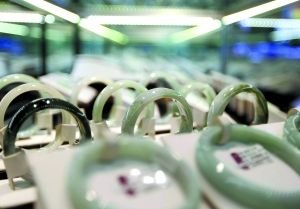
  “最近的一次缅甸翡翠开标,部分原石价格猛涨六七倍到上百倍,我和我的伙伴们都惊呆了!”昨天,在玉石界打滚十余年的一位玉石厂商经理告诉记者。记者近日走访市场发现,有消费者开始进场“抢玉”,翡翠价格涨两成。业内人士揭秘,广东玉商数千人到缅甸竞标,原石涨幅最低约1/3,最高上百倍,预计国内玉器或迎来一波新涨幅。但国内囤积玉石原料或够用20年,翡翠不具备大幅飙涨的基础,投资者要提防玉商炒作。

  “一个十余万元的镯子放出来,几天就卖出去了。”在广州传统工艺美术中心,负责人伍先生告诉记者,最近翡翠入市就像干松的海绵吸水一样,放多少吸多少。而在去年,这样的镯子经常半年才能卖出一件。

  翡翠再度火热,广州工业名优中心玉器展销负责人告诉记者,北京最近拍卖出一个纯绿的冰糯翡翠玉镯,“8000多万元!太让人震惊了!”

  据悉,今年6月开始,翡翠市场一改去年颓势,部分中高端翡翠今年以来涨幅达到20%。一些玉器厂开始对出厂的玉器提价,最近的一次提价在6月份,提价幅度在5%~10%之间。

  预测国内翡翠价格上涨两成以上

  “最近的一次缅甸翡翠开标,底价猛涨六七倍到上百倍。”昨天,在玉石界打滚十余年的一位玉石厂商经理告诉记者。据悉,今年6月缅甸翡翠公盘时隔一年后再度开标,竞标激烈,翡翠猛涨, “太疯涨了,部分成交价高于底价100倍的,完全超出了我们的心理预期。”

  “广东玉商到缅甸竞标的人数起码有两三千。”昨天,一名从业十余年的玉石界人士告诉记者,财大气粗的广东玉商包机去抢玉。去年揭阳玉商在缅甸公盘中标数十亿元,是缅甸公盘上收获最多的群体。

  但一名从业者告诉记者,缅甸此次竞标的部分成交价猛涨上百倍,不少石料同比上涨1/3左右,涨幅惊人。由于翡翠原料越来越稀缺,预测翡翠原石涨幅达到3~5成,预测国内翡翠价格将上涨两成以上。

  部分玉石厂商惜售态势明显

  “现在我们厂的玉石已经差不多用完了,要再从缅甸进口,价格高得惊人,已经超出了我们的预期。我们已经停止了部分生产线。”昨天,一名玉石厂商告诉记者:“现在揭阳等地部分厂子都停产了。因为手里没有了原材料,一些玉石厂商也开始放慢出货的节奏,惜售态势明显。大家都有种心态,物以稀为贵。留着这部分存货,将来看市场慢慢放出去。”

  记者采访中发现,越是高端的玉越罕见,也越少出现在市场上。“很多都是通过拍卖公司拍卖,或者内部熟人流转。如果市场上出现,购买者会非常谨慎,会要求出售者再到专门的鉴定机构出鉴定书。”一业内人士告诉记者。

  缅甸限采翡翠矿山致价格上涨

  “前年开始,缅甸各地开始关闭翡翠矿山,限制开采,目前市场上存量的玉石越来越少。”多名玉石界人士向记者表示。

  一方面是原石稀缺、价格上涨,另一方面是进口原石报关越来越规范。中国海关开始严查缅甸翡翠原料关税,所有翡翠原料入关,需按规定缴纳中国海关30%关税,令商家成本大大上升。“海关现在很严,以前100万元的税,可以报低,只要交二三十万元就够了,现在却要交一百万元。这个价差非常厉害,直接抬高了玉石的成本。”

  投资需提防:

  原料够用20年当心玉商炒作

  “国内囤积的翡翠原料足够用20年以上。”业内人士告诉记者,即便国内不再进口翡翠石料,短期内也不会真正短缺。“很多玉商遇到价格不满意宁可不卖。高端玉的销售节奏一直是由玉商把控的。”

  业内人士提醒投资者,翡翠再度疯狂有可能是玉商在炒作。一些国内囤货较多的玉商故意报出离谱价格,对翡翠上游价格进行一番新炒作,方便在国内出货。

  据悉,之前翡翠价格曾经经历过暴涨和萧条。2011年,由于原料价格上涨,翡翠零售价格随之大升,市场开始承接乏力,翡翠价格出现泡沫,随后翡翠市场迎来萧条。

  作者:微博 (来源:广州日报)